See This Vehicle


Why Churches Book the Church Van
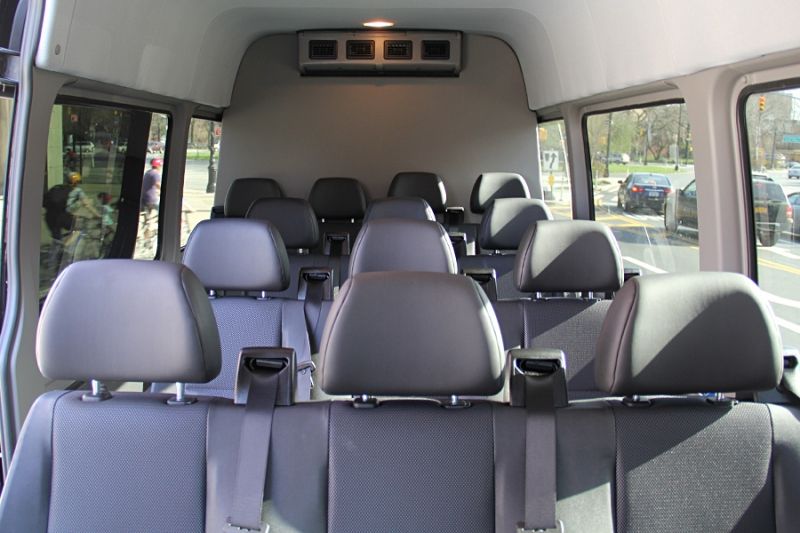
A 15-passenger church van is a strong fit for small church groups that need a compact vehicle without losing the feel of a dedicated church bus. It is commonly used for church travel to retreats, conferences, volunteer projects, and nearby events where the whole group wants to ride together. For missionary team travel, it gives enough room for people plus a modest amount of luggage or ministry supplies. Small choir sections also like it because the seating keeps the group unified and makes departure and arrival simple. In many churches, it fills the gap between a minivan and a larger church coach. That makes it a practical tool for congregation travel when the trip is short enough that a full-size motorcoach would be more than the group needs.
For real church passenger travel, the best use cases are usually the ones with 8 to 14 riders plus the driver. That range leaves room for Bibles, tote bags, folders, and a little cargo without turning the aisle into a storage area. Board retreats and elder-team trips are good examples because the group is often small, organized, and traveling with light bags. Quick regional runs also fit the vehicle well because they tend to have fewer pickups, fewer transfers, and tighter time windows. A church van rental is especially helpful when the ministry wants a single vehicle that can handle urban streets, narrow church lots, and direct point-to-point travel. When the schedule is simple, the van can be more efficient than splitting into multiple cars.
Driver planning matters just as much as seating, especially for longer church travel. A 15-passenger van is not the same as a school bus, and it does not have the same safety profile or the same operational rules as a larger bus designed for coach service. For church groups crossing state lines or operating longer itineraries, leaders should pay close attention to driver qualification, licensing rules, and any hours-of-service expectations that may apply to the broader trip arrangement. Churches also need to avoid treating the van like a full church motorcoach on a long-haul schedule, because fatigue, route complexity, and stop frequency can make that plan less safe. In practice, the van works best when the route is manageable, the driver is rested, and the day is not overloaded with back-to-back stops. That is why many ministries reserve it for regional church bus style trips rather than cross-country schedules.
Cost is usually driven by distance, live time, and trip length more than by passenger count alone. Short local church group transportation can stay relatively simple if the van leaves, completes the run, and returns the same day. Once the itinerary turns into a live day with waiting time, repeated shuttles, or overnights, the cost rises because the vehicle and driver are committed for longer periods. Multi-day ministry travel can also add driver lodging, meal allowances, and operational time that must be priced into the quote. If the group has substantial luggage or instruments, the provider may recommend a larger vehicle, which changes the price structure. In other words, the cheapest option is not always the smallest one; the right vehicle for church passenger travel is the one that fits both people and cargo without straining the schedule.
when_to_choose_paragraphs":["Choose the 15-passenger church van when your total count is roughly 8 to 14 riders plus the driver and you want everyone in one vehicle. That is usually the comfort sweet spot for church travel because the group can ride together without feeling cramped. It is a good match for small church groups, mission teams, and board retreats where the luggage load is modest. If your group is closer to 10 or 11 people with bags, the van usually feels more comfortable than a full-capacity load. This is also the best zone for quick regional runs, since loading and unloading stay simple. If the church wants easy urban maneuverability and no CDL requirements in most states, this category often makes the most sense.","Upgrade to the next-size-up church bus or church coach when your real-world load exceeds about 12 riders with meaningful luggage or when you need more aisle comfort. A van may still have seats left, but those seats stop being useful once suitcases, music cases, or retreat supplies crowd the cabin. If you expect 13 to 15 total riders on a longer trip, the comfort math often tips toward a larger vehicle because every extra body reduces legroom and usable cargo space. Churches often discover this on choir section trips or mission outings where the headcount is legal but the ride is not comfortable. A larger church motorcoach is also better when the trip includes multiple hours on the road, because passengers can spread out more. If your group needs a stronger coach-style experience, move up before the schedule becomes a strain.","Drop down to a smaller van or two smaller vehicles when the headcount is well under 8 and the route is short. That can be a better church van rental choice when you only need a few leaders, a pastor, or a small elder-team trip and do not want to pay for unused seats. Smaller vehicles are easier to park, easier to load, and often more efficient for local congregation travel with light cargo. On the other hand, if you are already adding a second row of luggage or bringing equipment that takes away seats, the 15-passenger van starts to make more sense. The decision is really about comfort math: the more people, bags, and trip hours you add, the faster the van reaches its useful limit. When the trip is simple and the group is small, downsize; when the group is near capacity, stay with the van; when cargo or distance rises, move up."],"faqs":[{"q":"Is a 15-passenger church van good for youth group trips?","a":"Yes, it is often a strong fit for youth group trips when the group is small enough to stay under the practical comfort range. Many churches use it for church travel to retreats, service days, and regional events because it keeps the group together and simplifies supervision. The van is especially useful when the route includes short drives, quick stops, and modest baggage. If the youth group is large or each rider has a bag, you may need a larger church bus or a second vehicle."},{"q":"Can a church use this vehicle for missionary team travel?","a":"Yes, missionary team travel is one of the most common uses for this class because the van handles people and light cargo in one package. It works well for airport transfers, regional project travel, and short mission runs where the team has bags, coolers, or supplies. The key issue is not only passenger count but also cargo volume, because gear can quickly reduce seating comfort. For longer mission itineraries, a church coach may be a better choice if the team has heavy luggage or multiple travel days."},{"q":"Do we need a CDL to drive a 15-passenger church van?","a":"In most states, a CDL is not required for a vehicle that carries 15 total occupants or fewer, but state rules can differ. Churches should still verify local licensing, insurance, and any organizational safety policies before assigning a volunteer driver. A standard license may be enough for many church van rental situations, yet that does not remove the need for driver training and route planning. The safest approach is to confirm the exact vehicle registration class and the state rules before church passenger travel begins."},{"q":"Is a 15-passenger van the same as a church bus?","a":"People often use the terms loosely, but they are not always the same in practice. A 15-passenger van is a smaller church bus style option that usually works best for short to medium church group transportation, while a larger church motorcoach is built for more passengers, more luggage, and more comfort on longer trips. The van is easier to maneuver and usually simpler to staff with volunteer drivers. The coach is better when your ministry needs more room, more amenities, and a stronger long-distance travel setup."},{"q":"How much luggage can we bring on a church van trip?","a":"That depends on how many riders you have and whether the vehicle has a rear cargo area or luggage rack. As luggage increases, the practical passenger capacity decreases because bags compete with seats and legroom. For church travel, planners should think in terms of tradeoffs rather than a fixed baggage limit. If the trip includes instruments, presentation gear, or retreat supplies, the church van rental may need fewer riders to stay comfortable and safe."},{"q":"Can a choir section travel comfortably in this vehicle?","a":"Yes, small choir sections often travel well in a 15-passenger church van, especially for regional performances and rehearsal weekends. The group stays together, which helps with timing, warmups, and keeping music folders organized. If the section is carrying robes, stands, or larger instrument cases, the usable seating may shrink. In those cases, a larger church coach or a second vehicle may be the better church passenger travel solution."},{"q":"What should churches know about safety on longer routes?","a":"Church leaders should respect the limits of the vehicle and the driver, especially on longer routes or in bad weather. A 15-passenger van is top-heavy compared with smaller vehicles, so loading, tire condition, and driver alertness matter a great deal. For longer church travel, rest breaks and realistic schedules are important because the vehicle is not a substitute for a full-size church motorcoach built for extended service. If the itinerary is complex, heavy, or overnight, it may be smarter to upgrade rather than force the van into a role it was not designed to fill."}]} }�၌} 0ੱ}
When to Choose the Church Van vs. Other Church Buses
Choose the 15-passenger church van when your total count is roughly 8 to 14 riders plus the driver and you want everyone in one vehicle. That is usually the comfort sweet spot for church travel because the group can ride together without feeling cramped. It is a good match for small church groups, mission teams, and board retreats where the luggage load is modest. If your group is closer to 10 or 11 people with bags, the van usually feels more comfortable than a full-capacity load. This is also the best zone for quick regional runs, since loading and unloading stay simple. If the church wants easy urban maneuverability and no CDL requirements in most states, this category often makes the most sense.
Upgrade to the next-size-up church bus or church coach when your real-world load exceeds about 12 riders with meaningful luggage or when you need more aisle comfort. A van may still have seats left, but those seats stop being useful once suitcases, music cases, or retreat supplies crowd the cabin. If you expect 13 to 15 total riders on a longer trip, the comfort math often tips toward a larger vehicle because every extra body reduces legroom and usable cargo space. Churches often discover this on choir section trips or mission outings where the headcount is legal but the ride is not comfortable. A larger church motorcoach is also better when the trip includes multiple hours on the road, because passengers can spread out more. If your group needs a stronger coach-style experience, move up before the schedule becomes a strain.
Drop down to a smaller van or two smaller vehicles when the headcount is well under 8 and the route is short. That can be a better church van rental choice when you only need a few leaders, a pastor, or a small elder-team trip and do not want to pay for unused seats. Smaller vehicles are easier to park, easier to load, and often more efficient for local congregation travel with light cargo. On the other hand, if you are already adding a second row of luggage or bringing equipment that takes away seats, the 15-passenger van starts to make more sense. The decision is really about comfort math: the more people, bags, and trip hours you add, the faster the van reaches its useful limit. When the trip is simple and the group is small, downsize; when the group is near capacity, stay with the van; when cargo or distance rises, move up.
Amenities on Every Church Van
- Captain seating — improves comfort and helps smaller church groups stay separated from luggage or instruments during church travel.
- Air-conditioning — essential for hot-weather congregation travel, especially on regional runs and mid-day ministry travel.
- Luggage rack or rear cargo area — keeps suitcases, tote bags, and sound gear out of the aisle for safer church passenger travel.
- Easy urban maneuverability — useful for tight church parking lots, downtown pickups, and quick route changes.
- No CDL required in most states — makes volunteer-driver coverage easier for church group transportation, though state rules still vary.
- Forward-facing seating — supports calmer rides for prayer, conversation, and worship-team coordination.
- Seatbelts — important for faith-based group transportation and for reducing motion during stop-and-go church bus operations.
- Low step-in height — helps older adults, board members, and choir singers board more easily.
- Compact wheelbase — easier for church travel on neighborhood streets than a larger church motorcoach.
- Cargo flexibility — useful when a church van rental must carry ministry supplies, folders, hymnals, or small instrument cases.
- Multiple seating configurations — lets churches choose between more passengers or more room for luggage on short trips.
Cost of a Church Van for Church Groups
Typical church van rental costs are driven first by distance, then by how long the vehicle is live, and then by whether the trip includes overnights. Local church passenger travel usually prices differently from regional or multi-day ministry travel because daily mileage, dispatch time, and driver hours all change the operating cost. If the trip includes a live day with significant waiting time, the quote often rises even when mileage is modest. Overnights add hotel nights for the driver, and sometimes per diem or incidental expenses. Luggage, instruments, and extra cargo can affect the vehicle size you need, which changes the rate. Peak demand periods such as weekends, conferences, and holiday church events can also push pricing upward.
Other Church Bus Sizes We Run
- Large Motor Coach — 47-57 pax
- Medium Coach Bus — 35-40 pax
- Mini-Coach Bus — 20-28 pax
- Church School Bus — 60-72 pax
Popular Church Trip Types
- Baptist Mission Trip church bus
- Baptist Youth Retreat church bus
- Methodist Mission Trip church bus
- Methodist Youth Retreat church bus
- Non-Denominational Mission Trip church bus
- Non-Denominational Youth Retreat church bus
Ready to Book Your Church Van?
To book a church van rental, start with the travel dates, exact headcount, and the pickup and drop-off addresses. Then share luggage, instrument, or supply volume so the provider can confirm whether the van will work for your church group transportation needs. If the trip includes multiple stops, long live time, or an overnight, include that up front so the quote reflects the real ministry travel schedule. Providers can usually respond quickly once they have the core trip details and a clear picture of the seating and cargo needs.
Frequently Asked Questions
How many people fit comfortably in a 15-passenger church van?
A 15-passenger church van is usually the right fit when your group is about 8 to 14 riders plus the driver and you want one vehicle for church group transportation without moving up to a church bus. It works well for small church groups, missionary team travel, small choir sections, board retreats, elder-team trips, and quick regional runs. If the trip includes light luggage, it often performs better than a larger church coach because it is easier to park and maneuver. If you need more aisle space, more standing room, or larger baggage capacity, the next-size-up vehicle is often a better church travel choice.
What headcount is best for comfortable congregation travel?
For comfort, many church planners treat 10 to 12 passengers as the practical sweet spot when the group has carry-on bags, Bibles, music folders, or a few small instrument cases. Once you move toward 13 to 14 riders, comfort depends on how much cargo you are carrying and whether any seats are reserved for gear. A van with captain seating or flexible rear space can improve the ride for church passenger travel. If the group includes larger luggage or multiple instruments, the effective comfortable headcount drops even if the legal capacity does not.
When is a church van better than a church motorcoach?
Most churches use a 15-passenger van for shorter to medium-length church travel because it offers a strong mix of capacity, maneuverability, and cost control. It is especially useful for church bus needs like youth outings, regional choir appearances, and same-day ministry travel where the group wants to avoid the expense of a larger church motorcoach. The vehicle is easier to place in tight urban lots and can be simpler to dispatch with volunteer drivers in many states. For long-distance or multi-day travel, however, comfort, luggage volume, and driver fatigue can make a larger coach more practical.
When should we upgrade to the next-size-up vehicle?
A church van rental is usually better when your group is under about 15 total occupants including the driver and you do not need a full-size bus. It is also a smart choice when the route includes neighborhood streets, older church parking lots, or repeated stops that favor easy maneuverability. If the group is larger than the van threshold, or if you need more legroom, more rest-room-style onboard amenities, or substantial baggage capacity, then the next-size-up church coach is often the better fit. As a rule of thumb, if more than two or three seats would be sacrificed to luggage, you may be better off moving up.
How do luggage and instruments affect seating?
For ministry travel, every baggage decision matters because a 15-passenger van can reach its comfort limit quickly once folders, microphones, snack bins, and suitcases are loaded. A common planning rule is that every large suitcase or bulky equipment case reduces usable seating comfort, even if the van still technically has seats. If the group has instruments, worship gear, or retreat materials, the seating plan should assume less than the maximum headcount. Churches often choose the van for quick regional runs and upgrade to a bigger church bus when the cargo load becomes more important than the passenger count.
Do driver rules change for church trips and longer routes?
For any church bus or van trip, driver planning should respect fatigue, route complexity, and the legal rules that apply to the specific vehicle and state. Church leaders should confirm whether the trip crosses state lines, because federal rules can apply to larger passenger vehicles used for interstate passenger service, and school-bus-style rules are not the same as van rules. A standard 15-passenger church van often avoids CDL requirements in many states, but that does not remove the responsibility to check local licensing, insurance, and safety policies. For longer trips, leaders should plan realistic breaks and avoid using the van as if it were a full church motorcoach on an all-day schedule.
What details should we send for a fast quote?
The best booking time is as soon as the date, headcount, pickup address, and route are known, because quote accuracy depends on mileage, live hours, and whether the trip has overnights. Churches should also share luggage volume, instrument count, and whether the group needs a specific seating setup such as captain seating or cargo space. A clear trip summary helps the provider match the right church van rental or recommend a larger vehicle if needed. Many operators can turn around a quote quickly once they know the ministry travel basics and any special pickup or return timing.