
Roanoke churches planning Choir Tour usually need more than a ride; they need faith-based group transportation that keeps singers, directors, and instruments on schedule.
Overview: Roanoke Church Choir Tour Charter Bus Transportation
Roanoke has enough church density and denominational range that Choir Tour planning usually has to account for very different travel styles in the same market. Southern Baptist, Baptist, Presbyterian, Episcopal, and independent Bible church congregations all shape ministry travel differently, from the formal rehearsal culture of historic downtown parishes to the larger-ensemble expectations of suburban Baptist churches. First Baptist Roanoke, Bonsack Baptist, Grandin Court Baptist, Valley Community Church, Second Presbyterian, and historic St. John's Episcopal represent the kind of church network that regularly needs a dependable church bus or church coach for choir weekends, youth music trips, and mission outreach. Local church calendars also matter because spring concerts, Easter services, revival weekends, youth camps, and Advent programs can compress the same few weekends into heavy demand periods. That means a Roanoke broker has to think about not just vehicle size, but also scheduling around sanctuary rehearsals, school calendars, and denominational conference dates. For longer choir tours, the plan should leave enough margin for last-minute scripture readings, robe changes, and the kind of load-out that can slow down a multi-generational church group.
Roanoke's geography makes it a natural launching point for congregation travel into both the Blue Ridge and the Shenandoah Valley. I-581 feeds directly into I-81 and connects the city with US 460 and US 221, so a church motorcoach leaving from downtown Roanoke can head north toward Harrisonburg, south toward Christiansburg and the New River Valley, or east toward Lynchburg and Richmond without needing to cross the whole city. That highway network matters for churches planning multi-city Choir Tour stops because every added downtown detour affects call times, parking, and driver rest windows. Roanoke-Blacksburg Regional Airport is also the obvious airport connection for out-of-town singers or guest musicians who need airport transfers before a church travel weekend starts. Churches near the airport corridor or west side of town often use charter buses for ensemble movement while reserving smaller shuttles for pickup coordination. The practical result is that faith-based group transportation in Roanoke usually blends a coach route with one or two local staging points rather than a simple door-to-door run.
The city also sits close to retreat and conference centers that shape the local church calendar. Eagle Eyrie in Lynchburg is a familiar destination for Baptist and interdenominational groups, while Massanetta Springs serves Presbyterian, Reformed, and conference-style church programming that values chapel time and coordinated lodging. Roanoke groups also often use nearby camp or retreat properties in the wider Virginia and North Carolina region for youth choir weekends, leadership retreats, and ministry travel that combines worship and recreation. Because these sites are within a comfortable drive radius, a Roanoke church van rental may be enough for smaller teams, but full choir tours usually benefit from a church bus or church motorcoach with room for robes, folders, percussion, and AV cases. That is especially true when the itinerary includes an opening concert in Roanoke, then several days of travel through Virginia and into neighboring states. In those cases, the bus has to function as both transportation and mobile storage for the choir's ministry equipment.
Roanoke church transportation also has to respect the local reality of older urban church campuses mixed with newer suburban lots. Churches around Franklin Road, Old Southwest, Williamson Road, and the north side of the city can have tighter turning radii or limited bus staging, while larger suburban sites in Bonsack or along the city edge may offer easier motorcoach parking. That affects how a church travel schedule is built, especially if the choir is loading risers, sound gear, or snacks before an early departure. A broker serving Roanoke should ask not only about passenger count but also whether the group includes musicians with larger cases, children who need extra supervision, and directors who want a pre-trip devotion or warmup time onboard. The best plan is the one that keeps the congregation together, protects the instruments, and moves the whole ministry team without adding stress to the choir weekend.
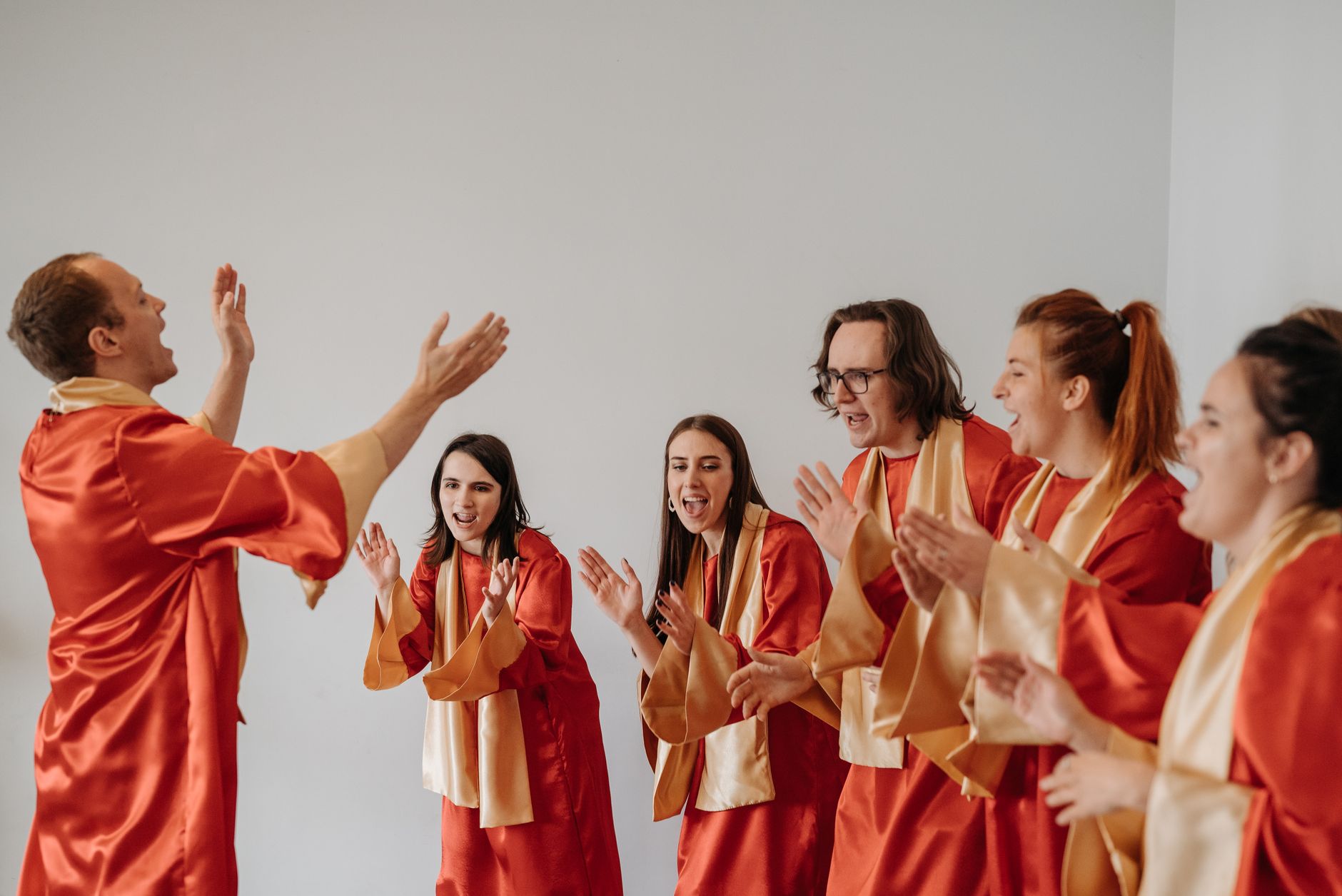
Fleet Options for a Roanoke Church Choir Tour
For a Roanoke church Choir Tour, the right vehicle depends on headcount, robes, luggage, music stands, instrument cases, and whether the group is running a full 4 to 10 day ministry travel schedule. A smaller church van rental can work for local rehearsals or airport transfers, but longer regional corridors out of Roanoke usually call for a mini-bus, mini-coach, or full church motorcoach with more aisle comfort and baggage capacity. Because choir groups often travel with directors, accompanists, and chaperones, the seat count should not be chosen on passenger math alone; cargo space matters just as much. For routes over I-81, US 460, US 221, or I-581 connections, it is also worth planning around driver-hours rules, rest breaks, and overnight stops so the church coach stays compliant and the ensemble stays rested.
| Vehicle | Seats | Best For | Notes |
|---|---|---|---|
| 15-passenger church van | 12-15 | This fits a small Roanoke church group doing local shuttles, sectional rehearsals, or a short same-day run to a nearby worship venue or airport transfer point inside the city region. | Best for very small ministry travel teams, airport runs, or a handful of singers with light bags; the tradeoff is limited cargo room, tighter comfort on longer Roanoke corridor trips, and the need to confirm who is authorized to drive under the rental and insurance rules. |
| 28-passenger mini-bus | 24-28 | This is a good fit for Roanoke church travel to nearby Virginia destinations, camp weekends, and one-night ministry trips that do not require a full-size coach. | A practical choice when a Roanoke church wants one vehicle for a medium choir section, youth choir, or a smaller adult ensemble with robes and music folders; it offers better luggage capacity than a van while staying easier to stage in tighter church lots. |
| 40-passenger mini-coach | 36-40 | This is often the right middle ground for Roanoke choir tours with 35 to 40 people, especially when the itinerary includes multiple worship stops and one or two overnights. | This size works well when a Roanoke congregation wants a comfortable church coach experience without a full motorcoach footprint; it can handle moderate luggage, some instrument cargo, and a longer aisle for touring days. |
| 57-passenger motor coach | 47-57 | This is usually the strongest fit for Roanoke ministry travel with 40 to 70 travelers, especially when the choir is crossing several cities over many days and needs the comfort of a full church motorcoach. | The best option for larger Roanoke church choir tours because it gives the most room for singers, directors, chaperones, and instrument crew, plus generous underfloor baggage space for robes, cases, coolers, and event supplies. |
Where Roanoke Church Groups Go for Choir Tour
Roanoke church groups commonly build Choir Tour routes around regional retreat and conference destinations that already understand ministry travel. Eagle Eyrie in Lynchburg is a familiar Southern Baptist and SBC-friendly stop for churches like First Baptist Roanoke, Bonsack Baptist, and other congregation travel planners who want a church camp or retreat environment with group lodging and worship space. Massanetta Springs near Harrisonburg is a natural fit for Presbyterian and Reformed groups, including congregations such as Second Presbyterian, because the campus is built around conference programming, chapel time, and choir-friendly scheduling. Episcopal and mainline congregations such as St. John's Episcopal and Christ Church often look for venues that can accommodate liturgical music, rehearsal blocks, and a more formal performance pace. For a Roanoke-based church bus trip, these destinations work well because they sit within a practical drive window for a 4 to 10 day itinerary and can be linked with nearby worship stops in the Shenandoah Valley, central Virginia, or the Research Triangle.
Roanoke churches also frequently send choir and youth music teams toward larger regional hubs where a church coach can pair concerts with Sunday services, festival appearances, or denominational meetings. Lynchburg, Harrisonburg, Charlottesville, Richmond, Greensboro, Charlotte, Raleigh, and the New River Valley are common choices because they offer church auditoriums, college chapels, and host congregations that can support faith-based group transportation. A choir from Grandin Court Baptist or Valley Community Church may pair a concert with a regional church plant visit, while a more traditional program from First Baptist Roanoke or St. James Episcopal may prioritize sanctuary acoustics and a formal host dinner. Roanoke pickup points near downtown, the southwest side, or the north side can usually connect to I-581, I-81, US 221, US 11, and US 460 without major detours, but the route should still account for local congestion near Orange Avenue, Williamson Road, and the Berglund Center area. For overnight stays, churches often mix host homes, campus housing, and hotel blocks near the performance city, with the bus parked where the driver can rest and the choir can load early the next morning.
Multi-Day Routing From Roanoke
A Roanoke choir tour usually begins with careful route design because the city sits at a junction of interstate and US-highway corridors that can either save time or create delays. The most common outbound paths use I-581 to reach I-81, US 460, US 221, and US 11, depending on whether the church is heading toward Harrisonburg, Lynchburg, the New River Valley, or the Piedmont. For a church bus leaving from a dense campus near downtown, the first challenge is usually getting onto the correct corridor without circling through congested surface streets around Orange Avenue, Williamson Road, or Franklin Road. That is why many Roanoke church groups prefer a single motorcoach over multiple smaller vehicles for longer tour days; it keeps the load together and simplifies staging. On a 4 to 10 day trip, the route should also be sequenced around host church rehearsal times, concert slots, and overnight check-ins so the choir is never rushed at arrival. Even one extra stop for a denominational event can change where the driver needs to rest and where the group can safely park overnight.
Driver-hours planning is just as important as geography when a Roanoke church sends a choir tour across multiple cities. The broker should build the itinerary so the coach has legal rest windows, the driver can use overnight lodging at each major stop, and the choir has enough time for worship, sound check, and loading without pressure. On long east-west or north-south corridors, fuel and restroom breaks should be scheduled at locations that accept larger vehicles, not just standard passenger cars. For example, routes through central Virginia, the Shenandoah Valley, or the Carolinas often work better when the team selects truck-friendly stops near highway exits rather than trying to improvise in smaller town centers. A host ministry should also confirm where the church motorcoach will park once it arrives, since some sanctuaries and retreat centers need advance permission for buses or trailers. Roanoke groups that coordinate that detail early usually avoid late-night confusion and can start the next day on time, which matters when the choir has more than one city on the calendar.
What This Typically Costs From Roanoke
Roanoke church Choir Tour pricing usually reflects how far the church coach must travel from the city, how many live days are on the road, and whether the itinerary includes driver overnights. For a 4 to 10 day ministry travel plan, most brokers price the charter as a base vehicle rate plus mileage, live-use time, tolls, parking, and any deadhead from the Roanoke pickup point. Summer weekends, holiday weeks, and peak retreat seasons around Easter, Advent, and spring break often price higher than off-peak weekdays. Driver lodging, gratuities, and a second driver for longer routes may appear as separate line items on longer faith-based group transportation quotes. Deposits are commonly required to hold the coach, and per-hour overage can apply if choir load-in, late services, or festival schedules run long. A careful quote should also show whether instrument cargo, trailer use, and any extra staging time at the church bus pickup point are included.
What Roanoke Ministry Leaders Usually Ask
What vehicle size works best for a Roanoke church choir tour of 35 to 70 people?
For a Roanoke choir of 35 to 70 singers, a 57-passenger church motorcoach is often the cleanest fit because it keeps the ensemble together and leaves room for robes, music bags, and a modest amount of instrument cargo. If the group is splitting across multiple pickup points near Roanoke, a second mini-coach or mini-bus can reduce boarding time and parking strain. For shorter rehearsal-day shuttles in the city, the smaller vehicle can make sense, but long overnight ministry travel favors the full coach. Coordination with the director and chaperones matters because choir travel usually needs extra time for warmups, staging, and secure luggage loading.
Which Roanoke highways matter most for a choir tour bus departure?
For Roanoke church groups heading out for Choir Tour, I-581 and I-81 are the core departure corridors, with I-581 connecting city churches to US 460, US 220, and access toward Roanoke-Blacksburg Regional Airport. US 221, US 11, and US 460 also matter for church travel to nearby valleys and campus stops. That means the route plan should account for urban merge points around downtown Roanoke, Orange Avenue, and the Berglund Center area before the bus gets onto longer highway miles. A broker should confirm the pickup point near the church and the best staging area so the church coach can load without blocking neighborhood traffic.
What airport should Roanoke churches use for Choir Tour transfers?
Roanoke-Blacksburg Regional Airport is the main commercial airport for city arrivals and departures, and it is the one most often used for airport transfers tied to ministry travel in the Roanoke area. For larger choral or instrument movements, a church van rental or mini-coach may be enough for airport runs, but full choir tours usually still rely on charter buses because the group size and luggage volume are much higher. If the itinerary includes airline arrivals, the bus plan should reserve extra time for baggage claims, rehearsal apparel, and any delayed flight changes. Coordinating the driver with the flight schedule helps avoid long curbside waits and missed sound checks.
Where do Roanoke churches usually take choir tour trips?
Roanoke congregations often send choir groups to Eagle Eyrie for Southern Baptist or SBC-style retreats, and to Massanetta Springs for Presbyterian gatherings and conference-style ministry travel. From Roanoke, churches also commonly use regional destinations in Lynchburg, Harrisonburg, Richmond, Charlotte, Raleigh, and the Shenandoah Valley for multi-stop choir tours, church festivals, and combined worship weekends. Historic churches such as First Baptist Roanoke, Bonsack Baptist, Grandin Court Baptist, Valley Community Church, Second Presbyterian, and St. John's Episcopal reflect the city's denominational mix, so the right charter plan should fit different liturgical and rehearsal needs. A church bus that works for a Baptist youth choir may need slightly different onboard storage and layover planning than a pipe-organ program from an Episcopal or Presbyterian congregation.
How should a Roanoke choir tour handle driver hours and overnight stops?
For Roanoke church groups, the biggest on-the-road issue is usually coordinating multiple worship stops without violating driver-hours rules on a 4 to 10 day itinerary. If the schedule includes evening performances, morning devotions, and a long interstate leg, the broker should build in proper rest breaks and overnight driver lodging rather than trying to force a late arrival. Fuel and rest stops along I-81, I-581, US 220, and US 460 should be selected with coach parking in mind, especially when the group is carrying robes, risers, percussion, or AV gear. A good church coach plan also confirms where the host ministry wants the bus parked overnight so the driver can rest and the choir can load quickly the next morning.
What parking and loading issues come up for Roanoke church bus trips?
For Roanoke church choir travel, the best loading locations are usually church lots with enough turning room for a motorcoach and a clear staging plan for singers, chaperones, and instruments. Historic or urban congregations such as Christ Church on Franklin Road, St. James Episcopal, and downtown-adjacent churches near I-581 often need extra attention because street access can be tighter than suburban sites in Bonsack or along the north side of the city. On arrival at a retreat center or host church, the bus should have a confirmed parking lane, unloading door orientation, and a contact at the venue who knows where the choir will rehearse. If the group has a trailer or oversized instrument cases, the broker should verify whether the venue allows trailer parking and whether overnight security is available.
How do Roanoke churches plan a multi-city choir tour route?
From Roanoke, a choir tour can usually reach many regional church destinations within a one-day drive, but the route should be chosen around live time, traffic near I-81 and the I-581 corridor, and rest breaks near Salem, Christiansburg, Lexington, or the Shenandoah Valley depending on direction. A church bus or mini-coach works well for short regional tours, while a full church motorcoach is better when the group includes a full choir, directors, chaperones, and multiple instrument cases. Multi-city itineraries should be sequenced so the longest highway leg comes first or second, leaving the final day lighter for worship service timing and the return to Roanoke. Good route design also avoids backtracking through downtown Roanoke when a direct highway staging point will save time and reduce parking stress.
How to Book Your Roanoke Church Choir Tour
To book Roanoke church group transportation, have the dates, pickup address, choir headcount, instrument list, luggage estimate, and destination cities ready before requesting a quote. It also helps to note whether the trip is tied to worship services, a retreat, a campus performance, or a multi-stop church tour with overnight parking needs. A well-prepared broker can usually return a preliminary quote within about 4 business hours, especially when the route and vehicle size are clear. Before confirming, review the quote for deadhead miles, driver lodging, overtime, parking, tolls, and whether the church van rental, mini-coach, or full church motorcoach best matches the actual load.
Related Church Transportation Pages
- Raleigh, NC: Choir Tour church bus in Raleigh
- Tampa, FL: Choir Tour church bus in Tampa
- Birmingham, AL: Choir Tour church bus in Birmingham
- Other Roanoke church trips: Roanoke Youth Retreat charter bus
- Other Roanoke church trips: Roanoke Senior Ministry Day Trip charter bus
- Other Roanoke church trips: Roanoke Youth Retreat charter bus
- Fleet overview: All church bus sizes and configurations
- Free quote: 60-second church group charter bus quote